Tuesday, February 21, 2012

Know Anatomy the Thymus

Synonym: Sweetbread

Definition


The thymus is a single pair of lymphoid organs located in the front part of the mediastinum. Thus, it is located above the heart and behind the sternum. The thymus is on both sides of the pleura. Usually, it develops from the third pharyngeal pouch. It is called the primary lymphoid organ because it is responsible for the primary development of T cells.

Structure and function


image of anatomy.
This organ has two asymmetric flaps, which are connected through connective tissue. The size of the thymus is dependent on age. It reaches its maximum size in childhood and weighs 30 g. The involution begins after puberty, when it is replaced by fat tissue. In adults, the thymus has an average weight of 18 g. This is often referred to as the retrosternal fat pad.
The thymus is situated in a cell-rich crust and can be viewed through a microscope. There are the typical Hassall's corpuscles of the thymus, which are an onion-like enrichment of epithelial cells (surface cells). Their function is not yet clear. In contrast, the cortex contains thymocytes. Therefore, the thymus is the only lymphoid organ that is also called a lymphoepithelial organ.

The thymus plays an important role in the development and differentiation of immune cells, called T cells. It is a kind of training ground for these cells. Immature cells that are formed in the bone marrow migrate into the thymus through the blood vessels. There they turn into thymocytes. Then they migrate through the cortex after several divisions of the thymic mark. This way they mature and develop T-cell receptors, which allow them to recognize antigens. There can be a negative selection and a positive one in the maturation process, depending on whether the antigens involved are endogenous or exogenous. First there is a positive selection. In this case, only those cells develop that have a so-called peptides receptor, but do not strongly bind to the MHC molecules. Then there is a negative selection, which ensures that the T-cell structures do not attack the body's own cells (self-tolerance). All cells that do not meet criteria die by programmed cell death (apoptosis). Just 5-10% of all T cells survive the maturation process. Only these cells reach the lymphoid organs and then colonize. Besides functioning as an immune organ, the thymus also acts as a hormone. The mediators it produces - thymosin, thymic and thymopoetin - influence the maturation of immune cells in the lymphoid organs.

Thymectomy


In children, the surgical removal of the thymus (thymectomy) causes impairment in the development of the immune system. However, this is the best way to eliminate the symptoms of myasthenia gravis. This is an autoimmune reaction against receptors on the motor plate of the muscles that leads to progressive muscle weakness. About half of patients with myasthenia gravis present an enlargement of the thymus, which is usually a thymoma (usually a benign tumor). Therefore, the autoimmune reaction is amplified as tumor cells have antigens similar to the muscle receptors. Therefore, patients can be relieved of the essential complaints through the surgical removal of the thymus.

The DiGeorge syndrome


The DiGeorge syndrome refers to an impaired development of the third and fourth pharyngeal pouches, which are normally formed during the embryonic development. The thymus is formed mainly from the third pharyngeal pouch, so an under-development of this organ can even cause the absence of the thymus. Other structures can also be affected, such as the parathyroid glands, teeth or throat muscles. The reduced or lack of training for T-cell patients leads to more or less severe immune defects. The most frequently encountered are heart defects, short stature and a general developmental disorder. The goal of therapy is a reduced exposure of patients to potentially immunostimulatory microorganisms. Therefore, hand disinfection and even face masks are important measures, as well as a well-developed vaccination schedule supplemented by antibiotic therapy. In principle, patients can also have a T-cell transfer, in which case the compatibility of HLA molecules is crucial (endogenous antigens on the white blood cells), otherwise the body may reject them. Therefore, normally, doctors use the cells of siblings with an identical HLA structure to perform this kind of procedures.

More information on anatomy lessons is available on the internet.

Tuesday, February 14, 2012

Golf A Sport for Rich People

Golf is increasingly popular and playing golf has become much more accessible, as well as the equipment necessary to practice it.

Play golf with the right golf clubs


The clubs are the main pieces of equipment in golf as they help you to adapt to different situations on the fairway. There are three types of clubs for three broad categories of strokes. The long shots require wood clubs numbered 1 to 9. The higher the number, the stronger is the stroke. High shots require iron clubs numbered 10 (pitching wedge) and 11 (sand wedge). These are used mainly to get out of the bunker or for shots to the green. Finally, the putter is a unique golf club set used on the green for the final stroke toward the hole. Be aware that a golfer can use all their golf clubs during a game. Golf reveals itself as a truly strategic game because the player can select a maximum of 14 clubs depending on the physiognomy of the course and the way of playing. As a beginner, you can buy a basic golf pack that costs about 300 USD and includes four irons and woods and a putter. Each of your clubs is numbered. You can also rent junior golf equipment on the site but it would be better to buy your own clubs if you are not a very good golfer.

image of golf club.
Clothing and golf accessories are very important


There are various other accessories you need to play golf apart from the golf bag. First of all, you need several clubs to succeed different shots throughout the course and, of course, you need a bag to carry all these clubs. You can always rent a cart in order not to carry your equipment around walking as the course is about 6,000 m-7,000 m long. You can also choose an electric cart, in which case your efforts are concentrated in the beatings. Golf is a game of patience. Usually, the 18-hole course requires many hours of play. The bag is intended not only for the carrying of the clubs, but also for the storage of objects the player usually needs to be comfortable - bottled water, light food, warm clothing in case of windy conditions, raincoats and umbrellas for bad weather, etc. - and that of necessary accessories such as balls, the tee or the divot.

Golf is also about image


Finally, golf has its dress code and an image of prestige to defend despite its extension. There may be no strict golf attire, but there are still certain aspects related to clothing golfers should pay attention to before stepping on the tee. The typical golfer is dressed in a polo shirt with a V-neck vest and simple sport pants because they are comfortable and the risk of being too cold or too hot is very low. The golfer must also invest in shoes because they may affect the stroke and even damage the golf course. The so-called "soft spike shoes" are recommended. Finally, you should not forget about the glove. The right-handed should wear the glove on the left hand, while the left-handed should wear it on the right one.

Golf is an outdoor sport, but technological advances offer people the opportunity to play golf in the city, inside cabins with a surface of just 30 square meters with a giant touch screen that allows for lifelike simulation. The game is played in 3D mode, so you hit real balls with your real clubs. If you live in the United States of America, you can try your swing on an indoor golf course. This is perfect for practice before playing on a traditional golf course.

Finally, you must also purchase a license each season in order to be allowed to play golf even as an amateur (apart from the accessories). Now you are ready to test the course.

Tuesday, February 7, 2012

The fragrance of Coffee

Animal like: animal-like, such as wet coat or sweat

Ashy: like cold ashes, an attribute of the roasting

Burnt, smoky: smoky, slightly burnt, as related to wood, more often in dark rusting

Chemical, medicinal: hospital-like, or as in the pharmacy, including "Rio-taste" because it occurs in certain Brazilian coffee, rather negative

Chocolaty: chocolatey, the scent of cocoa

Caramelly: soft, caramelized sugar

Malty, toast like: roasted like oatmeal, fresh bread

Earthy: earthy, moist soil,  negative

Floral: dandelions, Jasmine, nice acid

Fruity, citric: citrus, pleasant acid

Grassy green: immature fruit, fresh grass, leaves

Nutty: nutty, fresh walnut

Rancid, rotten: rancid fats, oils, foul, negative

Rubber like: like glue, hot rubber, typical of some robusta beans

Spicy: cinnamon, cloves, curry, allspice ...

Tobacco: how fresh pipe tobacco

Winy: fruity, high acid fine

Woody: freshly split wood, fine and positive


The taste
Acidity: Fine, nice acids are typical of Arabica. It must not  be confused with the unpleasant acid from wrong or poorly roasted coffee.
Bitterness: It is important due to a number of substances that can be amplified by rusting and preparation.
image of coffee.
Sweetness: The caramelization of sugar units

Salty:  Rare, rather undesirable (due to inaccurate cleaning of the machine)

Sour: vinegar, unpleasant, often in poorly prepared coffee


The body / The abundance
Good body: full, pleasant feeling in the mouth

Nearly no body: empty, aqueous in the mouth

Adstringency: after swallowing, astringent tones. It is often in Robusta.

Proper storage of coffee


Taste and aroma of coffee have natural enemies to fight with: light, oxygen and time . The less time is gone, the more aromatic is the taste of coffee. Light and oxygen can destroy more than 1,500 different components, the unique flavor of each type of coffee may disappear. To the coffee aroma, at least a chance must be given. There are some rules that should be considered:

Always buy whole beans and grind only the amount that is being required. The extra sleeve of a coffee bean is used as natural protection against light and oxygen and thus obtain the aroma.

The packaging open only when they will actually consume.

The bag is opened, remaining beans are possible, preferably, these must be stored in airtight containers, such as in a coffee can and not in the fridge . At low temperatures, you can fall to the flavor. In addition, coffee is a magnet, attracting odor smells from the environment to ail. Coffee, therefore, must never be stored with strong-smelling spices such as garlic. Garlic makes the taste of coffee pretty disgusting!

Tuesday, January 31, 2012

Avoid Debt: Credit Agreements

The "Living on credit" motto now appears to be quite frequently encountered in the some households. However, the use of credit also carries certain risks. You will always have difficulties if you spend more than you earn. You should calculate your revenue and expenditure before taking a loan. Take advantage of the many consumer advice opportunities available today in order to manage the money in your household properly. Do you have trouble with your bank? You can get help with this, too. Is your income very low? Then look into the potential claims you can file in an attempt to obtain state benefits such as housing benefits, supplemental benefits, child benefit supplements, etc.

Credit agreements


The Civil Code contains special provisions for consumer loans to protect consumers from usury better and to strengthen their rights. These regulations shall apply to financial assistance of any kind between a business as a lender and a consumer as a borrower. The only exceptions are loans and hire purchase transactions that amount less than 200 EUR and payment deferrals of up to three months. The main provisions are summarized below:

The loan agreement:


image of debt.
must be in writing,

must meet certain minimum information such as the net loan amount, interest rate and all other costs included and the manner of repayment of the loan,

must specify the annual percentage rate, which can be compared to different loan offers,

is void if the written form is not filled in or lacks any required information.
An agreement enters into vigor when a loan is taken. In that case, consumers can revoke their agreement within two weeks but only in certain conditions.

Exception: Real estate loan agreements may not give the consumer the right to cancellation and may also determine them to make a payment within two weeks. Such an agreement is invalid if you signed the loan agreement in a so-called doorstep, like your private home or workplace.

Real estate loan agreements are accompanied by a purchase agreement if the loan was taken to purchase a property and the lender is also the seller or if the lender and the seller work together so closely that both agreements represent an economically unified business. In such a case, your right of cancellation applies to both agreements, so beware.

The loan repayment:


will be expensive for the borrowers if they come in arrears with the installments because they have to pay additional interest. Consult a debt relief guide if you find yourself in a tight situation.


The lender may accept part payments (the first part amounts to the cost of collection and then to the debt and only then the interest is deducted from the payments). 

The loan termination by the lender is only possible if:
borrowers with two consecutive payments are wholly or partly in arrears;


these residues account for at least 10% of the total credit (with maturities of at least 5%) over three years and
the defaulting borrowers previously set a payment deadline of two weeks and were threatened with termination in case of non-payment.

Thursday, January 26, 2012

Symptoms in diabetes mellitus

Main symptoms are increased thirst, increased urination, fatigue and weight loss.
In type 1 diabetes, the symptoms are due to absolute insulin deficiency and is usually very acute and dramatic. In type 2 diabetes, however, no symptoms for years can be observed.
picture of diabetes.
Characteristic symptoms include:

Thirst

Increased urination

Unexplained weight loss

Fatigue and general decrease in performance

Prone to infection,

Poorly healing wounds

Leg cramps

Visual disturbances

Itching and Acetone breath

Diabetes type 1 can cause weight loss, malaise, tormenting thirst, frequent urination, faster and deeper breathing, changes in acid-base balance, the development of a diabetic coma with loss of consciousness without prompt treatment within weeks.

The onset of type 2 diabetes usually progresses slowly and, initially, may be completely free of symptoms. Other symptoms such as increased thirst, malaise, increased susceptibility to infection, itching, fatigue and dizziness are often misinterpreted. Nevertheless, already consequential damages to the heart, kidneys, eyes and nerves have been formed at this time. In particular, the monitoring of the well being of patients is vital after this.

Gestational diabetes generally causes no symptoms and can therefore be easily overlooked. Nevertheless, it must be treated because it can lead to pregnancy complications.

Ophthalmic controls

Fundus photography as, screening method,  is well suited. It is an exclusive photograph of the retina but does not provide reliable assessment of the peripheral retina sections.
An examination of the eyes should be done once a year to determine if there is no retinopathy. This is made by an ophthalmologist.

Exceptions are:
1. Children before 11 Age should be examined only after a diabetes duration of five years.

2. Pregnant women should then be immediately examined upon detection of pregnancy. If it is discovered during pregnancy, the ophthalmologist will decide on the intervals.

3. Diabetes type 2 affected people should be examined immediately upon detection of the disease.

4. Before and after scheduled treatments, all patients must be examined quickly by an ophthalmologist.
This complete eye examination includes the first review of visual acuity. After the enlargement of the pupil with drops the lens and the vitreous and retina are examined (ophthalmoscopy). In certain indications, such as in certain diseases of the retina (retinopathy) and the point of sharpest vision (diabetic maculopathy), the injection of fluorescent solutions in the vessels of the retina (fluorescein angiography) for the investigation may be necessary.

If a diabetic eye disease is diagnosed, you have to review and strengthen the treatment of diabetic kidney disease, hypertension, the increased blood sugar and dyslipidemia.

Thursday, January 19, 2012

Choose the Right Roulette System

The Labouchere roulette system 


Labouchere is a roulette system that is believed to have been created in France sometime during the 1600s or the 1700s. The basic idea of this system is to compensate for the losses by investing a substantial amount of money after each loss.

picture of roulette.
This roulette system is designed to focus on even money bets, such as black or red. As a player, you start by deciding how much you want to win. For example, if you want to win 1,000 USD, you divide your bets in a series of bets summing up 1,000 USD.
Let's say you want to divide your bets in a series of ten bets. You can divide the money anyway as long as the total is 1,000 dollars. Here is an example: 50, 150, 100, 50, 50, 200, 100, 50, 100 and 150.

Take the numbers far to the left and far to the right, put them together and bet that amount. Therefore, your first bet for the example above is 50 USD + 150 USD = 200 USD.

If you win, delete the two outer numbers from your list. The next bet will be 150 USD + 100 USD = 250 USD. If you win, delete the external number and move on. If you lose, write down the total of 250 USD at the end of the line and delete the number far to the left. Thus, 250 USD becomes your new number for the outer right edge and the next bet is 100 USD + 250 USD = 350 USD.

Does the Labouchere system work?

The Labouchere system can be very costly and there is no guarantee that you will end the evening on plus.

Reverse Labouchere


In this case, you must decide how much you are willing to risk. This system is more aggressive than the traditional Labouchere system. Place the sum at the end of the line every time you win. If you lose, you delete the external numbers just as in the ordinary system.

The Fibonacci roulette system

The Fibonacci betting system is based on the so-called Fibonacci sequence: 1-1-2-3-5-8-13-21-34-55-89-233-275, etc. The sequence was introduced in Europe in the 1100s or 1200s by the Italian mathematician Fibonacci (Leonardo of Pisa) and is a Hindu-Arabic number system.

The Fibonacci system is suitable for even money bets (red or black). The numbers represent betting units (e.g. 100 USD) and each time you lose, you bet on the next number in the sequence. However, if you win, you go back two steps. When you come to the end of the series, you start all over again from the left.
Does the Fibonacci system work?

This system is basically a less aggressive variant of the Martingale system and has the same problems. You can lose a lot of money and there is no guarantee that you end the evening on plus.

Wednesday, January 11, 2012

How to Calculate the Poker Odds

The calculation of the odds is not complicated


Some players often advise you to act on your side when you have to make the decision to follow or move. What is the right decision? How do you decide? And how to act accordingly?
What is the calculation method?
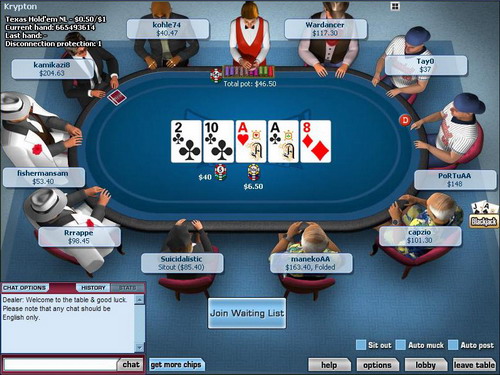
image of poker.
Mathematics plays an important role in Texas Hold'em poker. Actually, it is more about arithmetic rather than about mathematics in general.

The concept of curve is purely financial. It helps to you make the most profitable decisions in the long term at any time but there is no guarantee that the decision you make will have the expected result. However, it may be a good decision or a bad one.

The curve gives you the percentage of chances of hitting a winning hand after the flop and the turn.

Here is an explanation of how to calculate the poker odds. This calculation method is simplified, but the error margin is only 1%, so you can pretty much determine whether you will get a certain outcome or not.

Calculating the poker odds


There is a simple, fast and efficient way to determine the chances that your hand is better than your opponent’s. Odds are required for all poker tournaments strategies. This percentage is determined by calculating the number of cards that will improve your hand in advance.

The calculation of the "outs"


The "outs" (which can be translated as "outcomes") are the cards that can determine a win (at least it is assumed that you will definitely win if you focus on your opponent's gameplay). Also, if you find that your opponent has A-K and you have 7-8 on a flop of A-8-2, then you must get a 7 or an 8 on the turn and/or river.

So there are three 7s and two 8s in the deck of cards, which means that there are 5 cards that can save you, so exactly 5 cards in the deck that can get you to win over your opponent. Therefore, you have five outs to earn this shot on the turn or the river. You see that you can determine the "outs" by taking into account all the cards that can improve your hand enough to save you from your opponent (or opponents).

The calculation of the odds through the "outs"


You can only determine the curve once you know the exact number of your "outs". Once you know this curve, it is really easy to know the chances of winning the game.

Thus simply stick to the small calculations: 


How to calculate the flop curve when the turn and river are to come: Multiply your "outs" by 4 and add 2 to that result. You also need to konw the power hand rankings. If you take the example with 5 "outs", you have 5 x 4 + 2 = 22% chance of improving your hand and beating your opponent.

How to calculate the flop curve when only the river is to come: Multiply your "outs" by 2 and add 2 to that result. If you take the example with 5 "outs" on the river, you have 5 X 2 + 2 = 12% chances of improving your hand and beating your opponent.

So, you can determine the likelihood that you beat your opponent's hand. It will save you from paying too much or overestimating your hand.